

JDM swap, rebuild, or crate engine: which one actually pays off?
Your engine is dead. Now you have to spend money you would rather not spend, and the three obvious paths cost wildly different amounts while delivering wildly different results. So which one makes financial sense for your specific situation?
The honest answer depends on variables most articles skip: the value of your car, the availability of parts, your timeline, and whether you plan to keep the vehicle two more years or ten. Run the same three options through those filters and the winner changes completely. Let me lay out the actual tradeoffs the way I would for a customer trying to decide.
Take one concrete example to anchor the numbers. Say you own a common Honda or Toyota platform and the engine is done. Before you commit to anything, it helps to see what a complete replacement unit actually costs, so click here and note the price of a low-mileage import for your engine family. Hold that figure in your head as we walk through the alternatives, because every comparison that follows measures against it.
The rebuild path
Rebuilding your existing engine keeps the original block and rebuilds it with new internals as needed. Its appeal is familiarity. You know the engine’s history, it already matches your car’s wiring and mounts perfectly, and the mileage on the chassis stays honest.
The catch is cost unpredictability. A machine shop quotes you a number based on assumptions, then opens the block and finds the crank needs grinding or the head is cracked. Rebuilds have a way of growing. Labor dominates the bill, and skilled engine machinists are neither cheap nor fast. For a common domestic V8 with abundant parts, a rebuild can pencil out. For an aging import where individual components are scarce, the labor and parts hunt can exceed what a running replacement would cost.
The crate engine path
A brand-new crate engine from the manufacturer is the premium option. Everything inside is new, it comes with a solid warranty, and you know exactly what you are getting. For late-model vehicles still supported by the automaker, this is the low-risk choice, assuming your budget tolerates it.
The problem is that crate engines for older or enthusiast platforms often do not exist, and when they do, the price reaches into territory that only makes sense on a valuable car. Nobody spends crate-engine money on a commuter with a rough interior and 200,000 miles on the chassis. The math only works when the rest of the vehicle justifies the investment.
The JDM swap path
This is where imported Japanese engines earn their following. For a large swath of Toyota, Honda, Nissan, and Subaru platforms, a low-mileage JDM engine costs a fraction of a rebuild and a smaller fraction of a crate engine, while arriving as a complete, already-assembled unit. Set that figure you noted earlier against the machine shop’s rebuild estimate and the crate engine’s sticker, and the cost gap stops being theoretical.
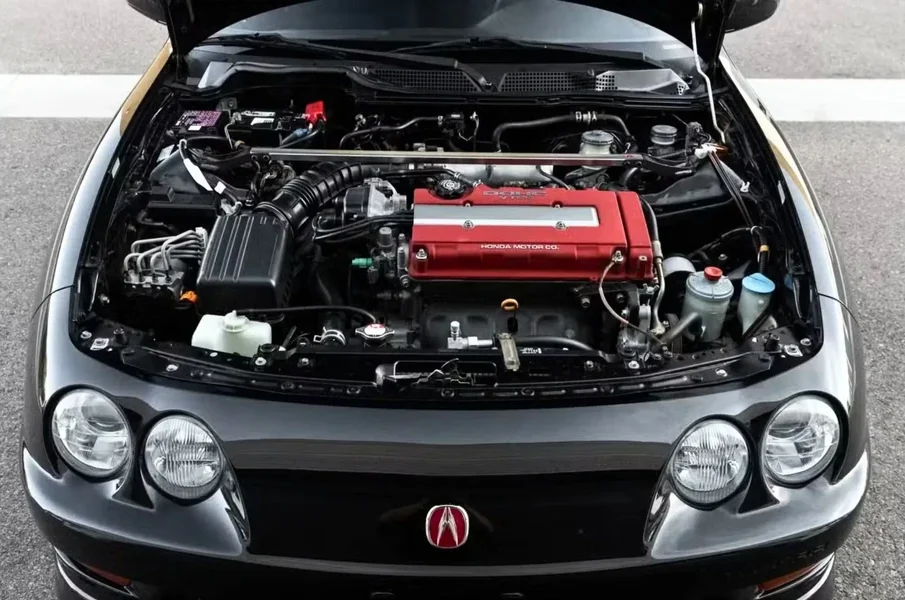
Take a common example. A Honda enthusiast with a tired B-series has three choices. Rebuild the existing motor and pay heavily for machine work and labor. Buy a crate engine that may not even be offered for that generation. Or drop in a JDM B18C that ran in a Japanese Integra, arrives complete, and costs less than the machine shop’s estimate for the rebuild. For that buyer, the swap is not close.
Where the swap loses
The JDM path has real drawbacks worth naming. Compatibility is not guaranteed. Japanese-market engines sometimes differ from their US counterparts in wiring, sensors, or accessories, and reconciling those differences takes labor and knowledge. You inherit an engine whose exact history you cannot fully verify. And unlike a crate engine, a used import carries some risk no matter how good the seller.
For a late-model car under manufacturer warranty consideration, or a platform where crate engines are readily available and affordable, the swap advantage shrinks. And for someone who lacks the mechanical skill or a trusted shop to handle compatibility quirks, the labor savings can evaporate.
Running your own numbers
The decision comes down to three questions. First, is your car worth the investment at all? If not, the cheapest running option wins by default, and that is usually a JDM swap. Second, does a crate engine even exist for your platform at a sane price? For most enthusiast imports, it does not. Third, how do local labor rates compare to the cost of a complete replacement unit?
For domestic V8s with cheap parts and a machinist you trust, a rebuild often stays competitive. For late-model vehicles with factory crate support, the new engine buys peace of mind worth paying for. For the enormous category of Japanese platforms where owners want performance and value, the imported engine tends to win on pure cost per running mile, provided you buy from a seller who inspects and warranties their stock.
The downtime factor nobody prices in
Money is not the only cost. Time off the road matters, and the three paths differ sharply here. A rebuild ties up your engine and your car for as long as the machine shop takes, which can stretch into weeks if they find surprises or wait on parts. A crate engine ships ready to install, but only if one exists for your platform. A JDM engine arrives complete and assembled, ready to drop in as soon as it clears shipping.
For anyone who needs the car back quickly, a daily driver rather than a weekend project, the complete-unit paths win on downtime alone. A rebuild that saves a few hundred dollars but leaves you carless for a month is not the bargain it looked like on paper. Factor your time and your transportation situation into the decision, because those costs are real even when they never appear on an invoice.
What it does to resale
There is a longer-tail consideration too. A documented low-mileage replacement engine can actually help resale on an enthusiast platform, because the next buyer values a fresh drivetrain with paperwork. A murky rebuild with no records does the opposite. If you might sell the car in a few years, the engine choice affects what it will be worth, and a clean import with a traceable history and a transferable warranty tells the next owner something reassuring that a mystery rebuild cannot.
There is no universal answer, and anyone who gives you one is selling something. Price out all three for your actual car before committing. Most buyers who do that arithmetic on a Toyota, Honda, Nissan, or Subaru discover the JDM swap delivers a running engine for the least money and the shortest downtime, which is precisely why the import market keeps growing while rebuild shops quietly refer customers toward it.


